
Arraystar R-loop Profiling (DRIPc-Seq) Service profiles LncRNA/mRNA organized R-loop distribution in the genome. S9.6 antibody is used to the highly specifically immunoprecipitate the R-loops. The RNA strands in the R-loops are sequenced. The R-loop Profiling data are bioinformatically analyzed to gain biological and functional insights.
Along with LncRNA Array, MeDIP-seq, or ChIP-seq, R-loop Profiling Service provides valuable functional insights in epigenetic and transcriptional regulation by R-loops.
Benefits
• Powerful profiling: To study R-loops as a new player in gene regulation in the genome.
• Strand specificity: To identify lncRNAs/mRNAs in the R-loops, precise locations, and strand directions in the reference genome.
• High reliability: Well established optimal experimental procedures to produce best possible results.
• Flexibility: The R-loop Profiling Service can be performed for any species with a reference genome.
• Rigorous quality: The positive and negative controls ensure library quality.
• Rich annotation: RNA type (lncRNA or mRNA) in R-loop, R-loop peak GC skew values, classification, distribution & enrichment in gene features, and distribution within gene body
• Visualization: Provided with genome browser tracks, and publication-ready graphics.
Watch Video> R-Loops: An Active Player in Cancer and Diseases
| Service Name | Price |
|---|---|
| R-loop Profiling (DRIPc-seq) Service |
Regulation by R-loops
R-loop is a RNA:DNA three-stranded hybrid structure formed between LncRNA/mRNA strand and the template DNA strand by base pairing, leaving the non-template DNA strand unpaired and displaced in the loop (Fig. 1) [1]. R-loops are widely distributed, occurring in 5% of the mammalian genomes [2.3]. R-loops are often located in the CpG islands of the promoters or transcription stop sites. High GC skews (G enrichment over C in the downstream of TSS non-template strand), G-quadruplexes, DNA gaps and DNA/RNA modifications contribute the formation of R-loops [4]. R-loops have important biological functions in gene regulation, DNA replication, and DNA/histone modifications.
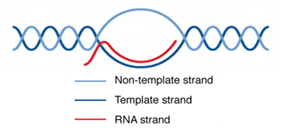
Figure 1. R-loop structure[5].
Antisense lncRNA organized R-loops impact mRNA transcription
R-loops can form between an antisense RNA strand and the DNA in the loop. TCF21 is a tumor suppressor in many cancers. TARID (TCF21 antisense RNA inducing demethylation) is a head-to-head antisense lncRNA of TCF21 gene and forms R-loop in the promoter region (Fig. 2). The R-loop is recognized by GADD45a, which recruits demethylase TET1, removes DNA methylation, increases TCF21 mRNA transcription, and regulates the cell cycles [7].
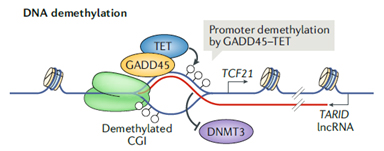
Figure 2. Antisense lncRNATARID forms R-loop to regulate TCF21 promoter demethylation and TCF21 mRNA transcription [4].
mRNA organized R-loop regulation of DNA methylation and mRNA transcription
Normally, the R-loop at BAMBI (a negative regulator of TGFb) gene promoter facilitates more transcription. However in amyotrophic lateral sclerosis (ALS4), senataxin mutation reduces R-loop and increases the DNA methylation at the BAMBI promoter, leading to BAMBI transcription repression, TGFb signal transduction upregulation, and ALS progression (Fig. 3)[6].
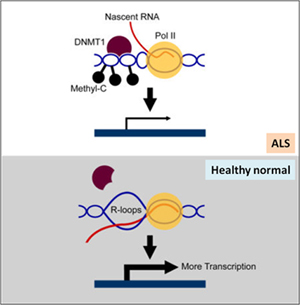
Figure 3. In healthy normal cell, R-loop at the BAMBI promoter facilitates more transcription. In ALS cells, Senataxin mutation suppresses R-loop formation at the promoter and BAMBI transcription.
Related Review
Why R-loop is an active player in transcription regulation?
Workflow
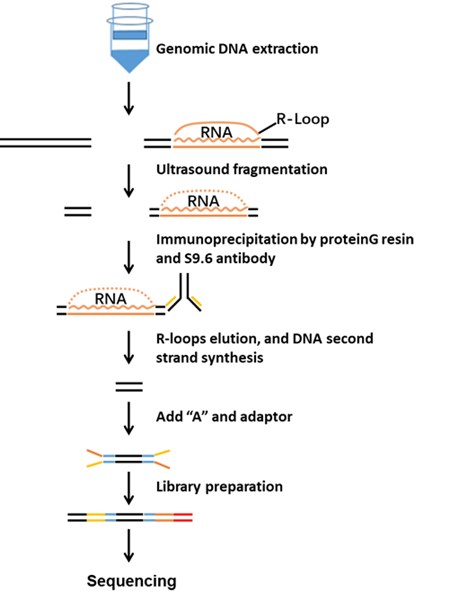
Fig 1. The workflow of R-loop Profiling Service
Bioinformatics
Peak Calling and Annotations
Statistically significant R-loop peaks are called by MACS2, using a p-value threshold at 0.001.
R-loop Peak Classification
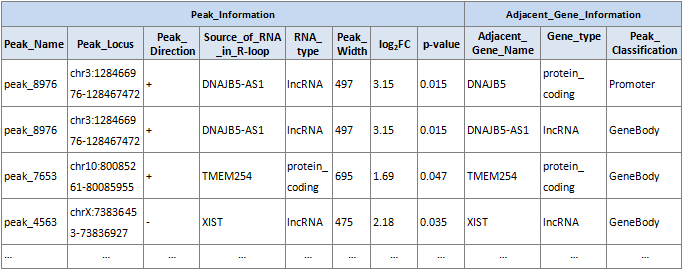
R-loop peaks are classified by their nearest (overlapping or close by) gene features using UCSC RefSeq annotation: promoter, gene body, terminator, or intergenic (Fig. 7). Summary stats of R-loop classification distribution are provided.

Figure 4. R-loop peak classification in one of the four types of gene features.
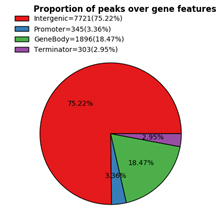
Figure 5. The proportions of R-loop peaks in gene feature classification.
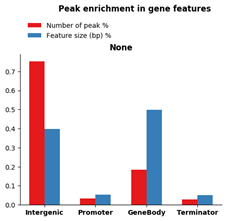
Figure 6. R-loop peak enrichment in gene features over random even distribution normalized for feature sizes.
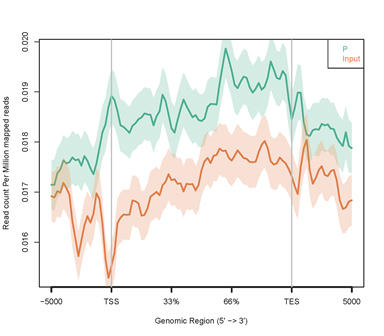
Figure 7. Distribution of R-loop peaks within Genebody. The X-axis represents the gene body between Transcription Start Site (TSS) and Transcription End Site (TES) (gene body lengths standardized to 100%). The Y-axis indicates the read count per million mapped reads.
References
[1] Hamperl S. and Cimprich KA. (2014) The contribution of co-transcriptional RNA:DNA hybrid structures to DNA damage and genome instability. DNA Repair (Amst) 19:84-94 [PMID:24746923]
[2] Sanz LA. et al (2016) Prevalent, Dynamic, and Conserved R-Loop Structures Associate with Specific Epigenomic Signatures in Mammals. Mol Cell 63(1):167-78 [PMID:27373332]
[3] Li M. and Klungland A. (2020) Modifications and interactions at the R-loop. DNA Repair (Amst) 96:102958 [PMID:32961406]
[4] Niehrs C. and Luke B. (2020) Regulatory R-loops as facilitators of gene expression and genome stability. Nat Rev Mol Cell Biol 21(3):167-178 [PMID:32005969]
[5] Hegazy YA. et al (2020) The balancing act of R-loop biology: The good, the bad, and the ugly. J Biol Chem 295(4):905-913 [PMID:31843970]
[6] Grunseich C. et al (2018) Senataxin Mutation Reveals How R-Loops Promote Transcription by Blocking DNA Methylation at Gene Promoters. Mol Cell 69(3):426-437.e7 [PMID:29395064]
[7] Arab K. et al (2019) GADD45A binds R-loops and recruits TET1 to CpG island promoters. Nat Genet 51(2):217-223 [PMID:30617255]
FAQ
What is an R-loop?
An R-loop is an RNA:DNA three-stranded hybrid formed between an RNA strand and the template DNA strand by base pairing, leaving the non-template DNA strand displaced in the loop. R-loops are widely distributed in mammalian genomes and occur preferentially in promoter CpG islands and transcription stop regions.
How does the R-loop Profiling (DRIPc-seq) Service work?
The S9.6 antibody is used to specifically immunoprecipitate R-loops, and the RNA strands within the R-loops are sequenced. The resulting data are bioinformatically analyzed to provide biological and functional insights into R-loop distribution across the genome.
Can the service be combined with other profiling services?
Yes. Along with LncRNA Array, MeDIP-seq, or ChIP-seq, the R-loop Profiling Service provides valuable functional insights into epigenetic and transcriptional regulation by R-loops, so the R-loop data can be interpreted together with those datasets.
Which species can be analyzed?
The R-loop Profiling Service can be performed for any species with a reference genome, so the same workflow can be applied across organisms as long as a reference genome is available for read alignment and peak annotation.
What does the analysis include?
Statistically significant R-loop peaks are called by MACS2 at a p-value threshold of 0.001 and classified by gene feature (promoter, gene body, terminator, or intergenic). Peak enrichment, distribution within the gene body, RNA type and strand direction, plus genome browser tracks are provided.