Epitranscriptomic Sequencing

m3C HAC-Seq

HAC-Seq (Hydrazine-Aniline Cleavage Sequencing) is a sequencing technology for transcriptome-wide mapping of tRNA m3C modifications at single-nucleotide resolution. m3C plays important roles in maintaining tRNA structure, decoding accuracy, and translation efficiency. Dysregulation of m3C-related enzymes and tRNA m3C modifications has been associated with tumor progression and metastasis in cancers such as hepatocellular carcinoma and breast cancer, as well as neurological and mitochondrial disorders. Arraystar m3C HAC-Seq combines selective hydrazine-aniline chemical cleavage, next-generation sequencing, and bioinformatics analysis to enable accurate and quantitative profiling of the tRNA m3C methylome for epitranscriptomics research.

Benefits:

With the expertise in tRNA, Arraystar m3C HAC-Seq service offers:

  • Single-Nucleotide Resolution: Provides precise mapping of m3C sites at nucleotide-level accuracy
  • Chemical Specificity: Relies on highly specific chemical reactions rather than antibody affinity, eliminating background from non-specific binding and enabling quantitative stoichiometry assessment
  • Reliable site identification: eliminates false positives by integrating m3C-demethylated samples as controls for significant cleavage induction and rescue
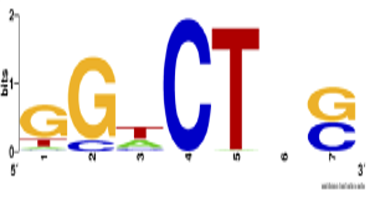
  • Comprehensive Analysis: Enables simultaneous identification of m3C sites and discovery of modification-associated sequence motifs
Service NamePrice
m3C HAC-Seq Service

First identified in 1963, N3-methylcytidine (m3C) at position 32 of the anticodon loop is a conserved tRNA modification found in eukaryotic tRNASer, tRNAThr, and tRNAArg. This modification acts as a critical regulator of translation and cellular physiology. In mitochondria, METTL8-dependent m3C on tRNAThr/Ser(UCN) is indispensable for protein synthesis, respiratory activity, and neural stem cell maintenance[1]. Cytoplasmic m3C32, mediated by METTL2A/2B/6 on tRNA-Ser-GCT, facilitates efficient AGU codon decoding and drives the translation of cell-cycle and DNA-repair regulators[2]. Beyond translation, m3C plays vital roles in disease and development: DALRD3-dependent modification of tRNA-Arg is crucial for neurological function[3], while METTL6-mediated modification of tRNA-Ser supports pluripotency and tumorigenesis[4]. Furthermore, nuclear METTL8 stabilizes R-loops via its methyltransferase activity, linking tRNA m3C modification machinery to genome organization[5]


Reference

  1. Zhang F et al: Epitranscriptomic regulation of cortical neurogenesis via Mettl8-dependent mitochondrial tRNA m(3)C modification. Cell Stem Cell 2023, 30(3):300-311 e311.[PMID: 36764294]
  2. Cui J et al: m(3)C32 tRNA modification controls serine codon-biased mRNA translation, cell cycle, and DNA-damage response. Nat Commun 2024, 15(1):5775.[PMID: 38982125]
  3. Lentini JM et al: DALRD3 encodes a protein mutated in epileptic encephalopathy that targets arginine tRNAs for 3-methylcytosine modification. Nat Commun 2020, 11(1):2510.[PMID: 32427860]
  4. Ignatova VV et al: METTL6 is a tRNA m(3)C methyltransferase that regulates pluripotency and tumor cell growth. Sci Adv 2020, 6(35):eaaz4551.[PMID: 32923617]
  5. Zhang LH et al: The SUMOylated METTL8 Induces R-loop and Tumorigenesis via m3C. iScience 2020, 23(3):100968.[PMID: 32199293]

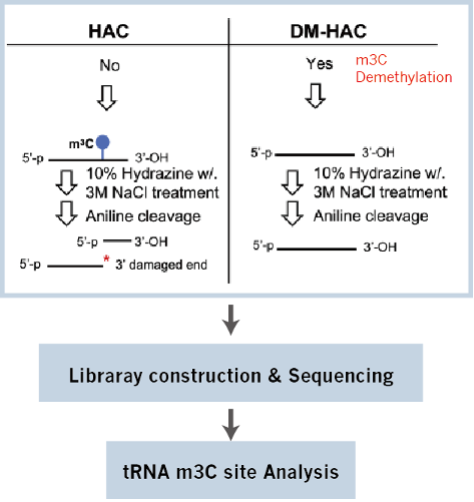
Figure. m3C HAC-Seq workflow. Isolated tRNAs were treated with hydrazine and aniline (HAC) to cleave the RNA backbone at m3C sites. To confirm specificity, samples were treated with demethylase prior to HAC (DM-HAC) to remove m3C modifications. Since HAC-generated 5′ fragments contain damaged 3′ ends that preclude adapter ligation, sequencing captures only full-length and 3′ cleaved fragments. Consequently, m3C sites were identified at single-nucleotide resolution by calculating the cleavage ratio.


The m3C HAC-seq provides a wealth of bioinformatics analyses to better understand their biology and facilitate biomarker applications.

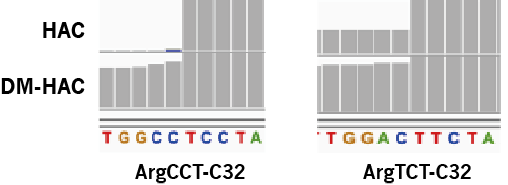
IGV displays of read alignments around m3C32 sites on different tRNA
Sequence motif analysis of m3C-modified tRNAs