
Arraystar G4 CUT&Tag is a cutting-edge technology designed to map and profile DNA G-quadruplex (dG4) structures in the genome at high resolution and specificity. To use the service, customers must first construct G4 Cut&Tag libraries with Arraystar G4 CUT&Tag Library Prep Kit. The constructed libraries are then sent to Arraystar for sequencing and data analysis service.
Place an order for Arraystar G4 CUT&Tag Library Prep Kit.
Benefits
• High resolution, specificity, sensitivity, and reproducibility: High-resolution mapping of G4 sites within a few bases. Highly specific and sensitive antibody targeting for superior G4s signals. The results are highly reproducible across technical replicates.
• G4 detection in enhancer, promoter, and gene body regions, even for transient G4s in vivo.
• Convenience: Tagmentation is much easier to perform than ChIP-seq based methods. No optimization of fixation, sonication, digestion, or immunoprecipitation required.
• Improved sample prep: Cells are collected by centrifugation instead of original ConA magnetic beads, which is applicable to more sample types (e.g. most cell types or frozen tissues) at higher cell viability (> 85%).
| Service Name | Price |
|---|---|
| G-quadruplex (G4) CUT&Tag Service |
Background
DNA G-quadruplexes (dG4s) are non-canonical nucleic acid structures formed by guanine-rich sequences into four-stranded helices stabilized by guanine tetrads and monovalent cations (e.g., K ). G-quadruplexes play crucial roles in several key biological processes, including transcription regulation, telomere maintenance, and genome stability. G-quadruplexes have attracted attention for their links to diseases, including cancer, and neurodegenerative diseases.
G4 Cut&Tag (Cleavage Under Targets and Tagmentation) is a cutting-edge technology designed to map and profile DNA G-quadruplex (dG4) structures with high resolution and specificity. In the G4 Cut&Tag procedure, native G4 structures within mildly permeabilized cells are bound with G4-specific antibody BG4, also further stabilizing their conformation in vivo. A Protein A/G-Tn5 transposase complex is then attached to the antibody, which, upon activation with Mg²?, cleaves the DNA around G4 sites while simultaneously tagging the sequencing adapters (tagmentation). Unlike ChIP-seq, G4 CUT&Tag bypasses chromatin fragmentation (sonication), crosslinking, and immunoprecipitation, thereby greatly reducing background noise and increasing reliability.
Bioinformatics
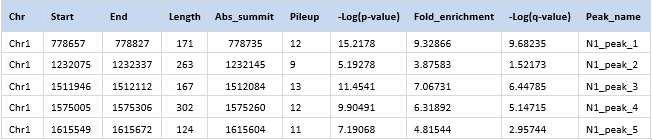
Figure 1. G4 peak detection by MACS2
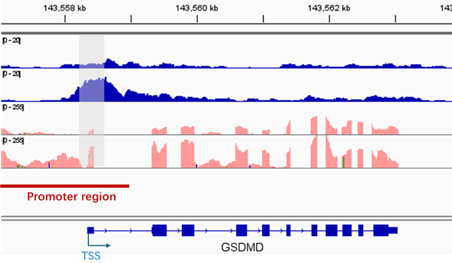
Figure 2. G4 peak visualization (e.g. at GSDMD gene locus)
FAQ
What is a DNA G-quadruplex (dG4)?
DNA G-quadruplexes are non-canonical nucleic acid structures formed by guanine-rich sequences into four-stranded helices stabilized by guanine tetrads and monovalent cations such as K+. They are implicated in transcription regulation, telomere maintenance and genome stability, and have been linked to cancer and neurodegenerative disease.
How does G4 CUT&Tag work?
Native G4 structures in mildly permeabilized cells are bound by the G4-specific antibody BG4, which also stabilizes their conformation in vivo. A Protein A/G-Tn5 transposase complex is attached to the antibody and, upon activation with Mg2+, cleaves the DNA around G4 sites while tagging the sequencing adapters.
How does it differ from ChIP-seq?
Unlike ChIP-seq, G4 CUT&Tag bypasses chromatin fragmentation (sonication), crosslinking, and immunoprecipitation. This greatly reduces background noise and increases reliability, and removes the need to optimize fixation, sonication, digestion, or immunoprecipitation.
Do I need to prepare the libraries myself?
Yes. Customers first construct G4 CUT&Tag libraries with the Arraystar G4 CUT&Tag Library Prep Kit, and the constructed libraries are then sent to Arraystar for sequencing and data analysis.
Which regions can be detected, and what is analyzed?
G4s are detected in enhancer, promoter, and gene body regions, including transient G4s in vivo. Analysis includes G4 peak detection by MACS2 and G4 peak visualization, for example at the GSDMD gene locus.