Epitranscriptomic Sequencing

Arraystar GlycoRNA-Seq (rPAL-Seq) Service

GlycoRNAs are a newly discovered class of small RNAs modified with glycosylation. They represent a paradigm-shifting class of biomolecules with new biological and disease functions, yet their systematic profiling has long been constrained by in vivo metabolic labeling requirements and limited specificity. Built on RNA-optimized periodate oxidation and aldehyde labeling (rPAL) chemistry coupled with optimized small-RNA sequencing workflow, Arraystar GlycoRNA-seq enables quantitative profiling and de novo discovery of glycoRNAs.

Benefits:

  • Metabolic chemical reporter (MCR) free: GlycoRNAs can be metabolic labeled in live cells with metabolic chemical reporter Ac4ManNAz or Ac4GalNAz for detection. The rPAL chemistry in GlycoRNA-seq bypasses MCR probe-induced toxic metabolic perturbations, cell-type-specific incorporation biases, inefficient labeling, background noise, and in vivo living cell requirement.
  • RNA integrity and native state preserved: Captures naturally occurring glycoRNAs in their native state; Milder than galactose oxidase (GAO) approaches; Avoids copper-catalyzed click-chemistry degradation.
  • Broad sample compatibility: Direct detection compatible with glycoRNAs in primary or cultured cells, tissues, clinical biopsies, biofluids, and live or preserved samples.
Service NamePrice
GlycoRNA-Seq (rPAL-Seq) Service

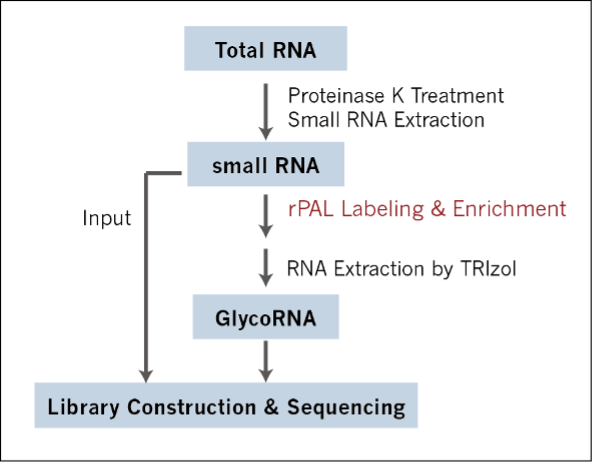
Figure. GlycoRNA-Seq workflow. Total RNA from cells or tissues is treated with proteinase K and size fractionated for small RNA species. The small RNAs are then subjected to periodate oxidation and aldehyde ligation (rPAL) reaction to selectively biotinylate the glycan moieties on the glycoRNAs. The biotinylated glycoRNAs are affinity-captured with streptavidin beads and eluted by TRIzol extraction. Both the glycoRNAs and corresponding input RNAs are constructed into sequencing libraries and analyzed on Illumina sequencing system.

GlycoRNA-seq includes bioinformatic analyses to provide a wealth of information of their expression profiles and discovery new glycoRNAs, to better understand their biology and facilitate biomarker applications.

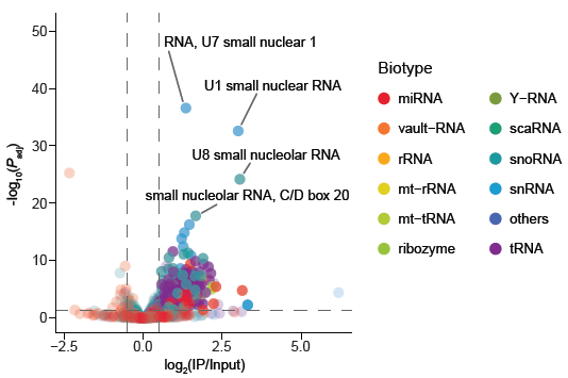
Volcano plot of glycoRNAs detected in Hela cells
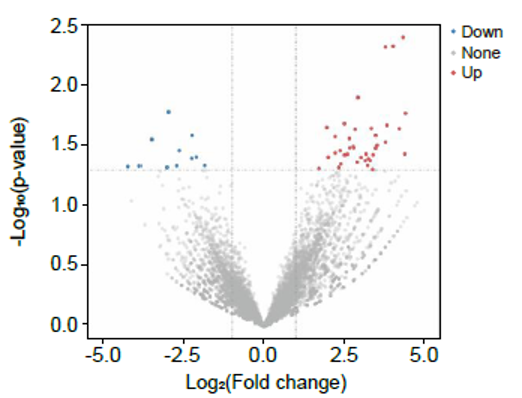
Volcano plot of glycoRNA differential expression between rectal tumor and adjacent normal tissues