
Arraystar R-loop Cut&Tag Service is a cutting-edge technology designed to map and profile R-loop structures in the genome at high resolution and specificity. To use the service, customers must first construct R-loop Cut&Tag libraries with Arraystar R-Loop CUT&Tag Library Prep Kit. The constructed libraries are then sent to Arraystar for sequencing and data analysis service.
Place an order for Arraystar R-Loop CUT&Tag Library Prep Kit.
Benefits
• High resolution, specificity, sensitivity, and reproducibility: High-resolution mapping of R-loop sites within a few bases. Highly specific and sensitive antibody targeting for superior R-loop signals. The results are highly reproducible across technical replicates.
• R-loop detection in enhancer, promoter, and gene body regions, even for transient low abundance R-loops in vivo.
• Convenience: Tagmentation is much easier to perform than immunoprecipitation based methods. No optimization of sonication, digestion, or immunoprecipitation required.
• Improved sample prep: Cells are collected by centrifugation instead of ConA magnetic beads in the original protocol, which is applicable to more sample types (e.g. most cell types or frozen tissues) at higher cell viability (> 85%).
| Service Name | Price |
|---|---|
| R-Loop CUT&Tag Service |
Background
R-loops are RNA:DNA three-stranded hybrid structures that widely exist in the genome. They participate in many biological processes, playing particularly important roles in gene regulation and genome stability.
Arraystar R-loop CUT&Tag uses pre-assembled transposomes containing hyperactive protein A/Tn5 transposase fusion enzyme and transposons to target S9.6 antibody bound R-loops and tagment the R-loop sites (CUT&Tag, Cleavage Under Targets and Tagmentation)(Fig. 1). Compared with R-loop profiling by DNA:RNA immunoprecipitation (DRIP-seq), R-loop CUT&Tag-seq vastly simplifies the R-loop sequencing library prep, allowing lower sample inputs, higher resolution, lower background noise, reliable signals, fast and better results.
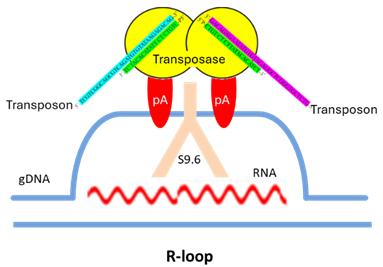
Figure 1. Arraystar R-loop CUT&Tag uses transposase/protein A fusion to target and tagment R-loops via S9.6 antibody.
Bioinformatics
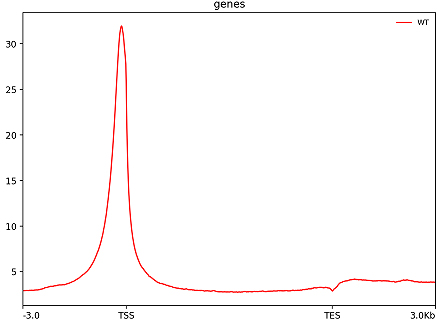
Figure 2. R-loop peak distribution in standardized transcription unit
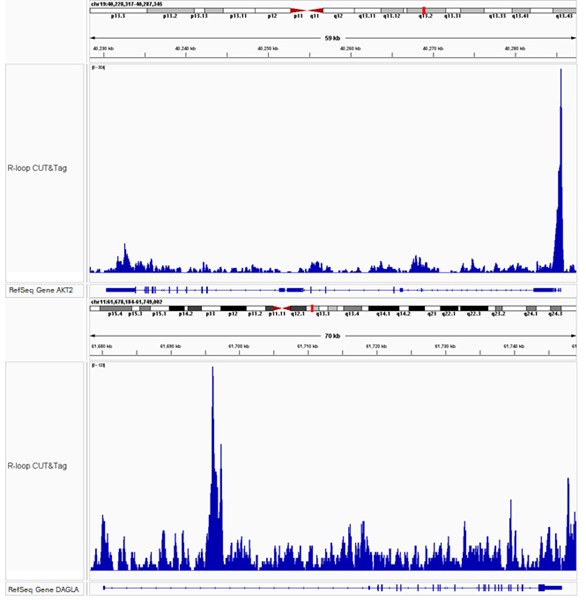
Figure 3. Genome browser view of R-loop CUT-Tag tracks
FAQ
What is R-loop CUT&Tag?
R-loop CUT&Tag maps R-loop structures at high resolution in the genome. Pre-assembled transposomes containing a hyperactive protein A/Tn5 transposase fusion are targeted through the S9.6 antibody to bound R-loops and tagment the R-loop sites (Cleavage Under Targets and Tagmentation).
How does it compare with DRIP-based R-loop profiling?
Compared with R-loop profiling by DNA:RNA immunoprecipitation (DRIP-seq), R-loop CUT&Tag-seq vastly simplifies the R-loop sequencing library prep, allowing lower sample inputs, higher resolution, lower background noise, reliable signals, and faster results.
Do I need to prepare the libraries myself?
Yes. Customers first construct R-loop CUT&Tag libraries with the Arraystar R-Loop CUT&Tag Library Prep Kit, and the constructed libraries are then sent to Arraystar for sequencing and data analysis. No optimization of sonication, digestion, or immunoprecipitation is required.
Which regions can be detected?
R-loops are detected in enhancer, promoter, and gene body regions, including transient, low-abundance R-loops in vivo. Because cells are collected by centrifugation instead of ConA magnetic beads, the workflow is applicable to more sample types, such as most cell types or frozen tissues, at higher cell viability (> 85%).
What analysis is provided?
Analysis includes R-loop peak distribution across a standardized transcription unit and a genome browser view of R-loop CUT&Tag tracks, so that peak positions and signal profiles can be examined locus by locus.