
Article
Restoration of N-glycosylation via leucine-activated leucyl-tRNA synthetase 1 overcomes chemoresistance in intrahepatic cholangiocarcinoma
Published in
Journal of Hepatology
Abstract
This study identified a critical role for leucyl-tRNA synthetase 1 (LARS1), a key enzyme in the tRNA charging machinery, in regulating chemotherapy sensitivity in intrahepatic cholangiocarcinoma (iCCA). The authors found that LARS1 expression is reduced in advanced tumors and is associated with poor patient outcomes. Loss of LARS1 impaired leucyl-tRNA charging and selectively decreased translation of N-glycan biosynthesis enzymes through codon-biased translational regulation. This disrupted N-glycosylation of the drug transporter ABCC1, enhancing drug efflux and promoting chemoresistance. Importantly, leucine supplementation restored LARS1 activity, rescued N-glycosylation pathways, and improved chemotherapy efficacy.
Results
• LARS1 is significantly downregulated in intrahepatic cholangiocarcinoma and positively correlates with patient survival.
• Loss of LARS1 induces chemoresistance in both cell culture and mouse models.
• Impaired LARS1 activity reduces leucyl-tRNA charging and selectively suppresses translation of N-glycosylation enzymes (ALG3, RFT1, and ALG12).
• Defective N-glycosylation causes hypoglycosylation of the multidrug transporter ABCC1, increasing drug efflux activity.
• Leucine supplementation restores LARS1 expression, rescues N-glycan biosynthesis, and enhances gemcitabine-oxaliplatin treatment efficacy.
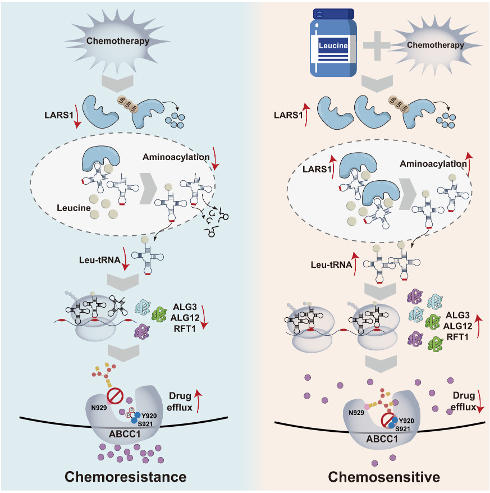
Fig. 1. LARS1-dependent tRNA charging regulates N-glycosylation and chemotherapy response.
Conclusion
The study demonstrates that leucyl-tRNA charging by LARS1 plays a central role in controlling selective translation and N-glycosylation pathways that determine chemotherapy sensitivity in intrahepatic cholangiocarcinoma. Reduced LARS1 activity promotes chemoresistance through translational defects that impair glycosylation of key transport proteins. These findings highlight tRNA charging as an important regulatory layer in cancer biology and suggest that leucine supplementation may represent a novel strategy to overcome chemotherapy resistance.
Arraystar tRNA Charging Sequencing
Arraystar tRNA Charging Sequencing is capable of profiling tRNA charging, expression,and modifications simultaneously. It provides comprehensive tRNA profiles key to tRNA studies in cancer drug resistance, cardiac fibrosis, and many other diseases.
Advantages
• Simultaneous tRNA profiles: tRNA expression, tRNA modification, and tRNA charging.
• High yields for full length tRNAs: Highly efficient full length cDNA synthesis to reduce mapping/counting inaccuracy.
• Broad modification coverage: tRNA modifications, e.g. m1A, m1G, m3C, acp3U, are predicted at single nucleotide resolution.
• Seamless integration with translatomics: To correlate tRNA charging with translation activities.
• Rich data and analyses: A wealth of tRNA multi-omics data come with common analyses (e.g. differential analyses) and detailed annotations, for comprehensive insights into the tRNAs.
• Publication-ready graphics and visualization