
Article
Arg-tRNA synthetase links inflammatory metabolism to RNA splicing and nuclear trafficking via SRRM2
Published in
Nature Cell Biology
Abstract
This study revealed a noncanonical role of arginyl-tRNA synthetase (ArgRS), a key enzyme in the tRNA charging machinery, in linking inflammatory metabolism to RNA processing. Under inflammatory conditions, extracellular arginine depletion reduced nuclear ArgRS levels and altered its interaction with the splicing factor SRRM2, resulting in widespread changes in mRNA splicing, cellular metabolism, and immune communication. The findings demonstrate that aminoacyl-tRNA synthetases function not only in protein translation but also as metabolic sensors coordinating inflammatory responses.
Results
• Arginine depletion reduces nuclear ArgRS levels
• ArgRS interacts with the splicing factor SRRM2
• ArgRS regulates SRRM2 nuclear trafficking
• ArgRS reshapes alternative mRNA splicing
• ArgRS-mediated splicing alters metabolism and immune signaling. ArgRS-dependent splicing changes affected metabolic enzymes, proteasome activity, and MHC-I peptide presentation, linking the tRNA charging machinery to immune communication during inflammation (Fig. 1).
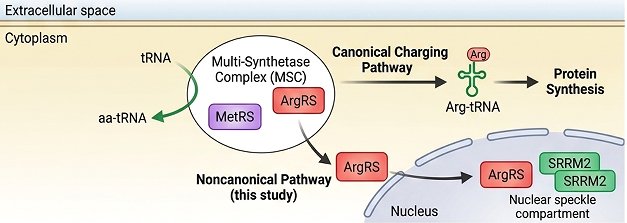
Fig. 1. ArgRS-mediated splicing alters metabolism and immune signaling.
Conclusion
The study demonstrated that ArgRS-mediated tRNA charging is closely connected to inflammatory signaling beyond its canonical translational role. Changes in amino acid availability can alter aminoacyl-tRNA synthetase activity and downstream RNA regulatory pathways, highlighting the importance of studying tRNA charging as a key regulatory layer in inflammation, immunity, and disease pathogenesis.
mim-tRNA-Sequencing
Arraystar mim-tRNA-seq (modification-induced misincorporation tRNA-seq) is capable of profiling tRNA charging, expression,and modifications simultaneously. It provides comprehensive tRNA profiles key to tRNA studies in cancer drug resistance, cardiac fibrosis, and many other diseases.
Advantages
• Simultaneous tRNA profiles: tRNA expression, tRNA modification, and tRNA charging.
• High yields for full length tRNAs: Highly efficient full length cDNA synthesis by TGIRT to reduce mapping/counting inaccuracy.
• Broad modification coverage: tRNA modifications, e.g. m1A, m1G, m3C, acp3U, are predicted at single nucleotide resolution.
• Seamless integration with translatomics: To correlate tRNA charging with translation activities.
• Rich data and analyses: A wealth of tRNA multi-omics data come with common analyses (e.g. differential analyses) and detailed annotations, for comprehensive insights into the tRNAs.
• Publication-ready graphics and visualization
Sample Requirement: >20ug Protected + deacylated (Contact Sales for Details)