
Article
Restoration of N-glycosylation via leucine-activated leucyl-tRNA synthetase 1 overcomes chemoresistance in intrahepatic cholangiocarcinoma
Published in
Journal of Hepatology
Abstract
This study demonstrated that leucyl-tRNA synthetase 1 (LARS1), a key enzyme in tRNA charging, regulates chemotherapy response in intrahepatic cholangiocarcinoma (ICC). Loss of LARS1 impaired leucyl-tRNA charging, selectively reducing translation of leucine codon–enriched transcripts involved in N-glycosylation, thereby promoting chemoresistance. Leucine supplementation restored LARS1 activity and improved chemosensitivity, highlighting tRNA charging as a critical regulatory layer linking amino acid metabolism, translation, and cancer therapy.
Results
• Chemotherapy promoted ubiquitin-mediated degradation of LARS1, decreasing charged leucyl-tRNA levels.
• Impaired leucyl-tRNA charging selectively reduced translation of leucine codon–enriched transcripts and promoted chemoresistance.
• Reduced tRNA charging impaired translation of key N-glycosylation enzymes (ALG3, RFT1, ALG12), leading to decreased N-glycosylation.
• Loss of ABCC1 glycosylation enhanced drug efflux activity and reduced chemotherapy sensitivity (Fig. 1).
• Exogenous leucine restored LARS1-dependent tRNA charging and synergized with chemotherapy in vivo.
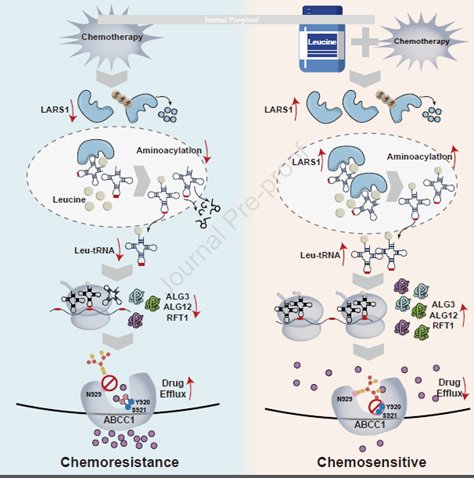
Fig. 1. LARS1-mediated tRNA charging regulates codon-biased translation, N-glycosylation, and chemoresistance.
Conclusion
This study highlights that tRNA charging is not merely a housekeeping process for protein synthesis but a key regulatory mechanism in cancer biology. LARS1-mediated leucyl-tRNA charging controls codon-biased translation and downstream glycosylation pathways that determine chemotherapy response. These findings underscore the importance of studying tRNA charging as an emerging regulatory layer in cancer progression and therapeutic resistance.
mim-tRNA-Sequencing
Arraystar mim-tRNA-seq (modification-induced misincorporation tRNA-seq) is capable of profiling tRNA charging, expression,and modifications simultaneously. It provides comprehensive tRNA profiles key to tRNA studies in cancer drug resistance, cardiac fibrosis, and many other diseases.
Advantages
• Simultaneous tRNA profiles: tRNA expression, tRNA modification, and tRNA charging.
• High yields for full length tRNAs: Highly efficient full length cDNA synthesis by TGIRT to reduce mapping/counting inaccuracy.
• Broad modification coverage: tRNA modifications, e.g. m1A, m1G, m3C, acp3U, are predicted at single nucleotide resolution.
• Seamless integration with translatomics: To correlate tRNA charging with translation activities.
• Rich data and analyses: A wealth of tRNA multi-omics data come with common analyses (e.g. differential analyses) and detailed annotations, for comprehensive insights into the tRNAs.
• Publication-ready graphics and visualization
Sample Requirement: >20ug Protected + deacylated (Contact Sales for Details)