Single-Base RNA Modification Sequencing
Related Products
Related Services
Related Reviews
Single-Nucleotide RNA O8G Modification Seq(O8G-miSeq)
Single-Nucleotide RNA O8G Modification Seq(O8G-miSeq) is a single-base, IP-based sequencing service that profiles 8-oxoguanine (O8G) on miRNA and pri-miRNA. An O8G-specific antibody enriches modified RNA fragments, and high-depth Illumina sequencing combined with G>T mutation analysis localizes each O8G site at single-nucleotide resolution.
Arraystar provides an end-to-end sample-to-data workflow, from O8G enrichment library and matched Input control through sequencing and bioinformatics, so researchers can map O8G and link it to miRNA targeting, stability, and function.
Benefits
Single-base resolution: combines IP enrichment and G>T mutation analysis to pin down the exact O8G site.
miRNA-focused: profiles O8G across miRNA seeds, pri-miRNA, and mature miRNA populations.
Functional readout: links O8G sites to changes in miRNA–mRNA targeting and biological effect.
Matched control: an Input library supports robust enrichment and true modification calling.
Antibody-based enrichment: an O8G-specific antibody captures modified fragments without sequence bias.
One-stop service: from sample to interpreted O8G data, with professional bioinformatics support.
| Service Name | RNA Class | Price |
|---|---|---|
| Single-Nucleotide RNA O8G Modification Seq(O8G-miSeq) | miRNA & pri-miRNA |
Background
O8G (8-oxoguanine) is an oxidative RNA modification produced when reactive oxygen species oxidize guanine in RNA. It pairs with adenine, frequently inducing G>T mutations, and is linked to redox-driven disease. O8G is a growing epitranscriptomic focus alongside m6A.
Widespread O8G modifications of miRNA seeds were shown in a 2023 Nature Cell Biology study to differentially regulate redox-dependent cancer development.
Key concept: Single-Nucleotide RNA O8G Modification Seq(O8G-miSeq) is a single-base sequencing method that enriches O8G-RNA with a specific antibody and, together with G>T mutation analysis and an Input control, identifies O8G sites on miRNA at single-nucleotide resolution.
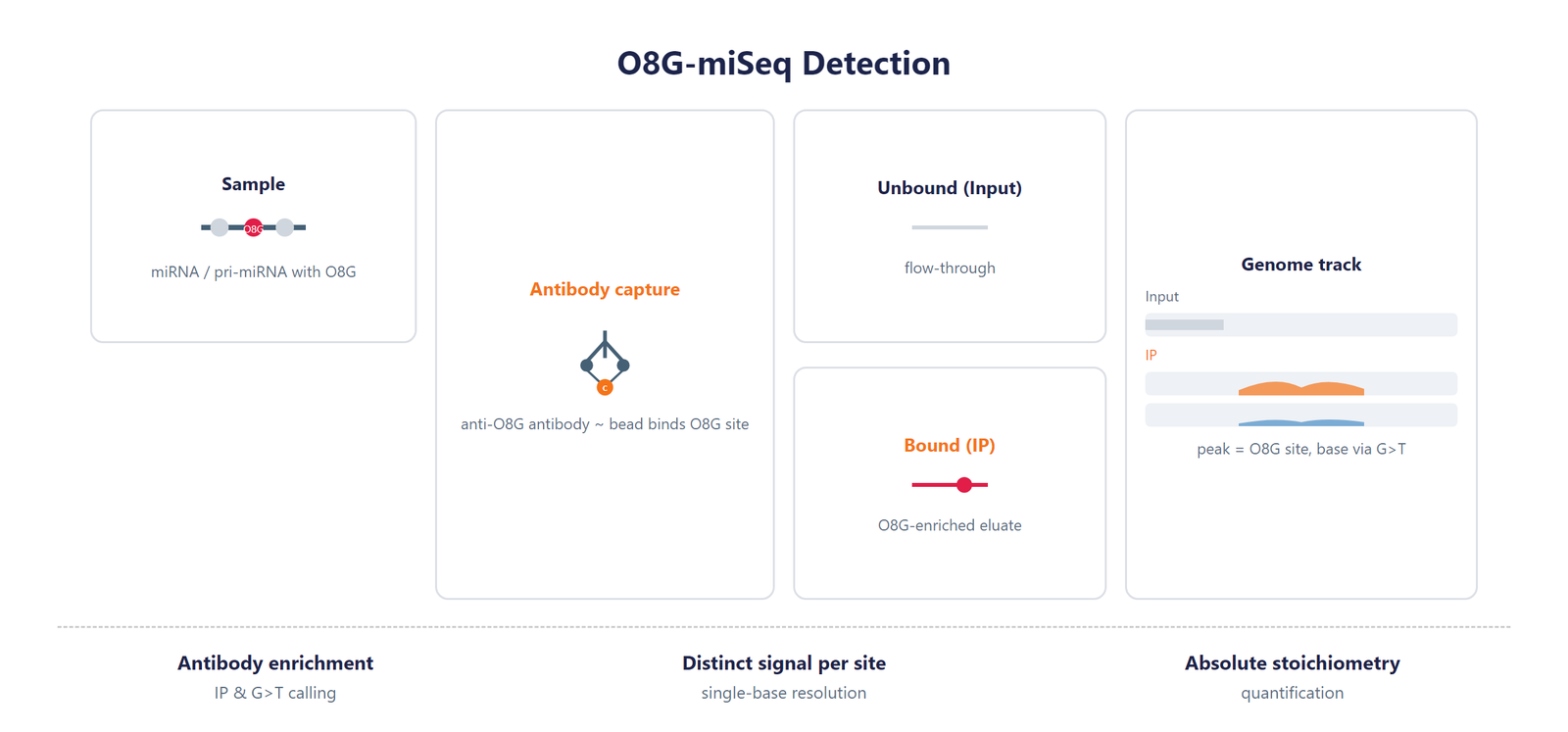
Figure 1. Single-Nucleotide RNA O8G Modification Seq scheme.
Workflow
Five steps from RNA sample to single-base O8G data:
Sample QC: assess RNA integrity and confirm small-RNA preservation.
O8G enrichment: immunoprecipitate O8G-modified RNA with an O8G-specific antibody.
Library construction: build the O8G-IP library and a matched Input control library.
High-depth sequencing: sequence on an Illumina platform to a depth suitable for O8G detection.
Bioinformatics: enrichment analysis and G>T mutation calling localize single-base O8G sites.
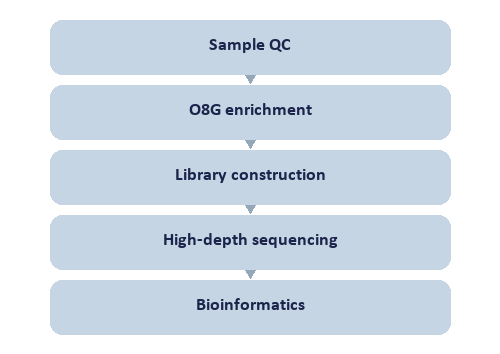
Figure 2. Single-Nucleotide RNA O8G Modification Seq workflow.
Bioinformatics
The bioinformatics pipeline screens O8G-enriched signals against the Input control, calls G>T mutations to pin O8G sites at single-nucleotide resolution, and reports target-gene analysis before and after O8G. Analyses include site tables, motif and distribution plots, differential modification, and genome-browser tracks.
Deliverables
- Raw FASTQ data files for the O8G-IP and Input libraries, ready for GEO/SRA deposit.
- QC report with BAM alignment files and core mapping statistics.
- Single-base O8G site tables (XLSX) with coordinates, site scores, and stoichiometry.
- O8G motif and distribution figures across miRNA/pri-miRNA (PDF/PNG).
- Differential O8G modification tables (XLSX) with fold change and significance.
- Target-gene and functional enrichment reports for O8G-bearing miRNAs.
- Genome-browser track files (bigWig/bedGraph) and a structured project report.
Research Applications
- Redox biology: profile O8G as a marker of oxidative stress in miRNA.
- Cancer research: relate O8G-modified miRNA seeds to tumor development and progression.
- miRNA function: connect O8G sites to changes in miRNA targeting and gene regulation.
- Biomarker discovery: identify differentially O8G-modified miRNAs in disease.
- Stem cell and development: track O8G dynamics across cell states.
- Drug-response studies: link O8G to therapy-induced oxidative signaling.
References
[1] Widespread 8-oxoguanine modifications of miRNA seeds differentially regulate redox-dependent cancer development. Nature Cell Biology 2023; DOI: 10.1038/s41556-023-01209-6.
[2] Position-specific oxidation of miR-1 encodes cardiac hypertrophy. Nature 2019; DOI: 10.1038/s41586-020-2586-0.
Sample Requirements
Storage Guidelines
Cells and Tissues: Preserve in TRIzol or an RNA stabilization solution; snap freeze in liquid nitrogen and store at -80 C.
RNA: Resuspend in ethanol or RNase-free ultrapure water; store at -80 C and avoid multiple freeze-thaw cycles.
Shipping Instructions
Place the sample in a 1.5 mL RNase-free microcentrifuge tube.
Seal the tube with parafilm or a cap lock to ensure sample integrity.
Ship the package on dry ice with adequate insulation to maintain the required temperature.
| Sample Type | Notes |
|---|---|
| Whole blood | Use EDTA tubes only, as heparin is not compatible with subsequent analytical procedures. |
| Cultured cells | Submission of cell pellets is preferred to ensure high-quality material for processing. |
| Tissue | Provide fresh or frozen specimens, ensuring that necrotic material is strictly avoided. |
| Total RNA | Maintain an OD 260/280 ratio ≥ 1.8 and RIN ≥ 7 with no visible degradation. Submit at least 2–300 µg total RNA. |
FAQ
What RNA types does this service profile?
This service profiles O8G on miRNA and pri-miRNA, with matched Input control libraries for robust single-base modification calling.
Can O8G be detected at single-base resolution?
Yes. O8G enrichment is combined with G>T mutation analysis and an Input control to localize each O8G site at single-nucleotide resolution.
How does the method differ from antibody-based m6A profiling?
It uses an O8G-specific antibody and G>T mutation calling; unlike region-level enrichment, it delivers base-resolution O8G sites on miRNA.
Does the service provide functional interpretation?
The pipeline reports enrichment analysis, G>T mutation site calling, and target-gene analysis before and after O8G modification.
What is the advantage high-depth sequencing?
High-depth Illumina sequencing ensures sufficient coverage to resolve low-abundance O8G miRNA sites and quantify modification levels.